Venturi Air Cooler and VTAS Valve
Havells
2019
Preface
The Venturi Air Cooler is an innovative cooling system that operates on Bernoulli’s theorem, using the Venturi effect to lift water without a pump. This energy-efficient and sustainable design significantly reduces power consumption while enhancing cooling performance. Unlike traditional air coolers that rely on mechanical pumps to circulate water, this system leverages airflow dynamics to create a pressure drop, lifting and evaporating water efficiently.
Problem Statement
Conventional air coolers face multiple challenges: • High Energy Consumption: Water pumps consume a substantial amount of power, increasing operational costs. • Maintenance & Reliability Issues: Pump-based systems are prone to failures due to clogging, wear, and power fluctuations. • Limited Cooling Efficiency: Inconsistent water flow affects the evaporation rate, leading to inefficient cooling. • Environmental Impact: Additional electrical components increase the carbon footprint and operational inefficiencies.
Solution
The Venturi Air Cooler eliminates the need for a pump by harnessing the Venturi effect. As air flows through a narrowed passage, its velocity increases, creating a pressure drop that naturally lifts water from the reservoir to the cooling pads. This results in higher evaporation rates, improved cooling performance, and significant energy savings. By integrating aerodynamic principles into the design, the system ensures consistent water flow without mechanical assistance, making it more reliable and eco-friendly. VTAS valve, which was invented for this cooler ensures, the water can be sucked through the entire height, even when the available suction pressure is low. This is achieved using the flexible diaphragms and a pin in VTAS valve. When the chamber of the valve is filled with water using the available suction pressure, The flexible diaphragms switch to a configuration sing the weight of water, which cut-offs the suction line from VTAs chamber and opens up the infusion tube.
Results
The Venturi Air Cooler stands out as a low-maintenance, energy-efficient alternative to traditional coolers. It offers: • Up to 30% lower power consumption compared to pump-based coolers. • Increased cooling efficiency due to improved evaporation dynamics. • Reduced maintenance as there are no pumps or moving parts prone to failure. • Sustainable operation, contributing to a greener environment.
My Role/Contribution
• Led the mechanical design, handling CAD modeling, detailed drawings, and calculations to ensure optimal airflow and pressure dynamics. • Developed and tested multiple prototypes, refining the design through iterative improvements. • Optimized component selection and material design for durability, performance, and cost-effectiveness. • Collaborated with cross-functional teams to integrate the system into Havells’ product lineup, ensuring feasibility and manufacturability.
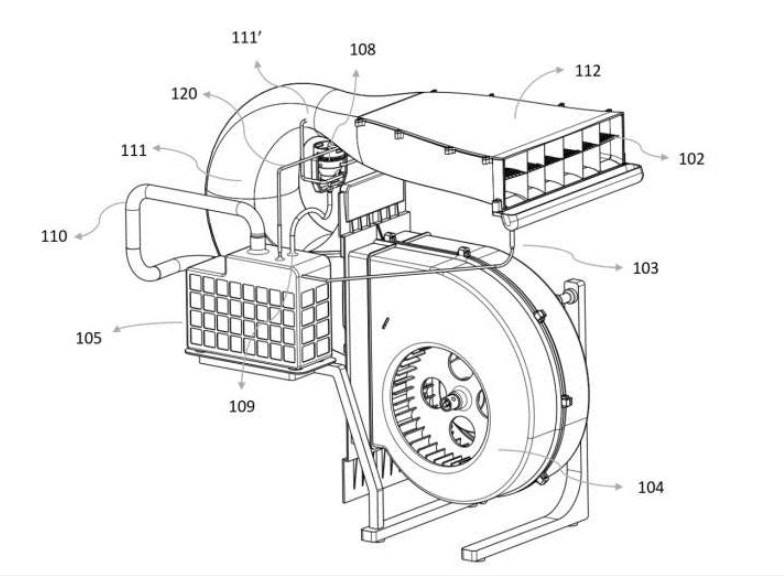
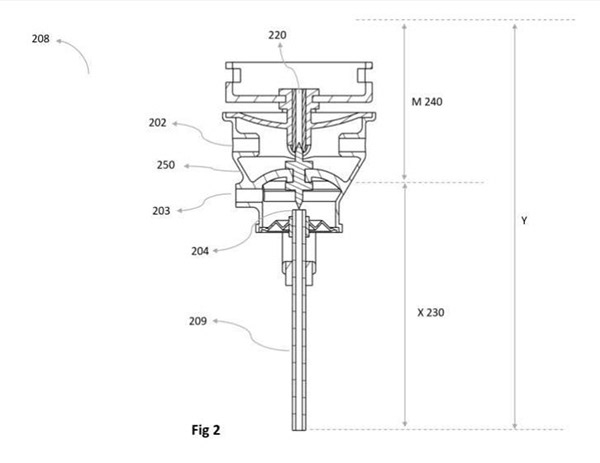
Interesting facts about Venturi Air Cooler
• It was my first project after university in 2019. • The idea took root after a casual conversation with my manager. It lingered in the back of my mind throughout the day, but it wasn’t until I was in the bathroom (away from distractions) that it clicked.
Working
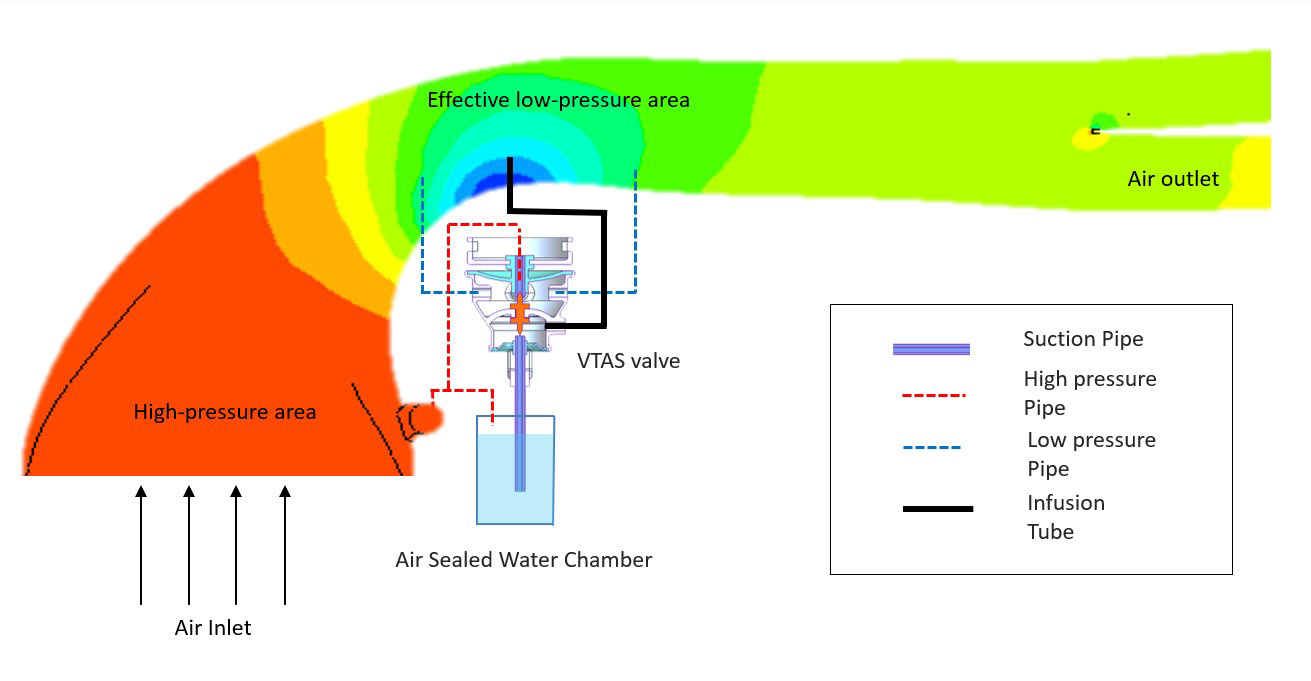
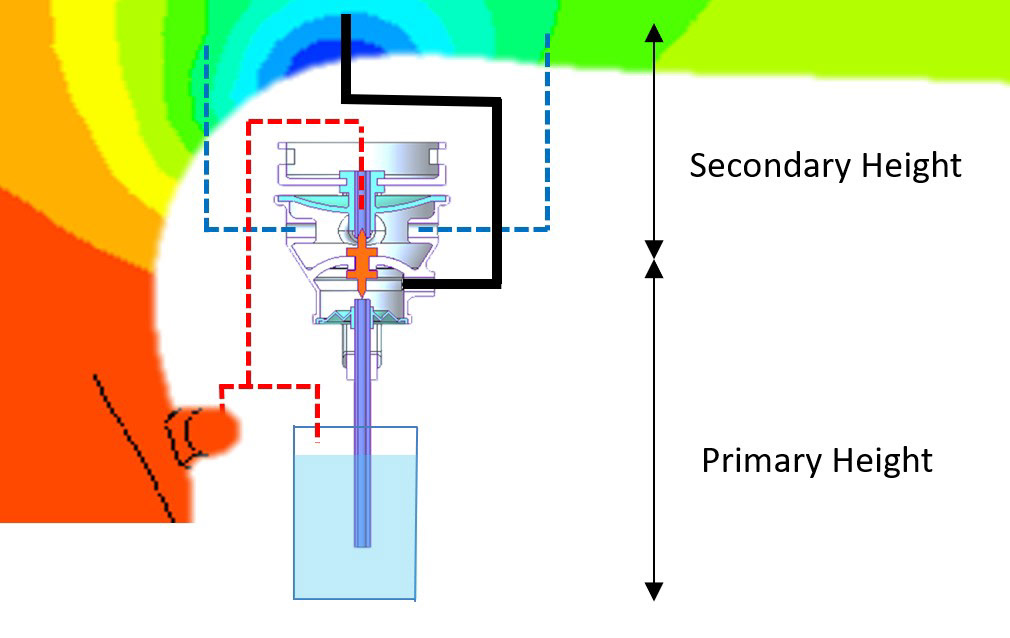
As the air enters the converging diverging duct and travels along the length, it gains kinetic energy and looses its pressure as an effect of gradually reducing cross sectional area. The gain in kinetic energy translates to high velocity of air, which results in a negative pressure area at the point of lowest cross sectional area. This negative pressure lifts the water and it is then infused in the throat section and the fast-moving air mixes with these water droplets, causing the water to evaporate. This process of evaporation absorbs heat from the air, making the air cooler. The height up to which the water can be lifted naturally using the throat is referred to as Primary Height. But usually this height is very low and cannot be practically used to mae a commercial product. In order to lift water from more height two additional mechanisms are deployed: • High Pressure Pipe: When air enters the converging-diverging duct, it creates a high pressure region at the entrance. This High pressure air is directed to air sealed water chamber and the VTAS valve. This high pressure is used to increase the local chamber pressure up from atmospheric. Due to this increased chamber pressure water could be lifted to more height as difference between the suction pressure and the local chamber pressure drives the height at which water can be lifted.
VTAS Valve (Vacuum To Atmospheric Switch Valve)
The VTAS valve is the heart of this pump-less system. It's a mechanically operated valve that works automatically in a cycle to lift water from the tank and inject it into the airflow. Here is its working cycle explained: 1. The low pressure created in the throat of the cooler is strong enough to suck water up to primary height from the main tank and into a small chamber within the VTAS valve. 2. As the valve's chamber fills with water upto primary height, it becomes heavier. This added weight causes the chamber to physically move downwards. This downward movement does two things simultaneously: it closes the suction pipe from the water tank and opens up the infusion tube. 3. With the water inlet now closed, high-pressure air from the high pressure pipe rushes into the VTAS valve chamber. This pressure forces the water out of the chamber through infusion pipe that leads directly into the low-pressure throat of the cooler (covering the secondary height) , where it is atomized and mixed with the main airflow. 4. Once the valve chamber is empty, it becomes light again and moves back up to its original position. This re-opens the inlet from the water tank and closes the high-pressure air pipe. The cycle then repeats, continuously supplying water for the cooling process. Essentially, the VTAS valve acts like a smart, self-operating bucket, using changes in weight and air pressure to automatically scoop up water and throw it into the air stream at just the right time and place Disclaimer: The information presented in this page is based on published information in form of patents and articles, and does not disclose any commercially sensitive details.