Oscillating Attachment
Stryker Corporation
2022
Preface
The Oscillating Attachment (OSCA) is engineered to work with Stryker’s Signature 2 High-Speed Motors (75,000 RPM). This attachment converts the motor's rotational motion into oscillation at the cutting bur, reducing soft-tissue damage while enabling precise cutting in cortical bone.
Problem Statement
Conventional high-speed rotational surgical drills are prone to soft tissue wrap on the rotating cutting tool, where surrounding tissue entangles around the rotating shaft of the cutting bur. The continuously rotating bur can catch and uproot adjacent tissue, leading to tissue accumulation on the bur shank and obstructing the clinician’s line of sight. When operating near critical anatomical structures, there is a risk of the drill catching or nicking vital tissue, potentially increasing procedure time and causing complications. Additionally, conventional high-speed drills have a high tendency to skive, sliding uncontrollably across the bone surface at elevated speeds. Accordingly, there is a need for a bone cutting tool that operates within an optimal middle ground, providing a safety profile while maintaining the cutting speed and efficiency of a high-speed drill.
Solution
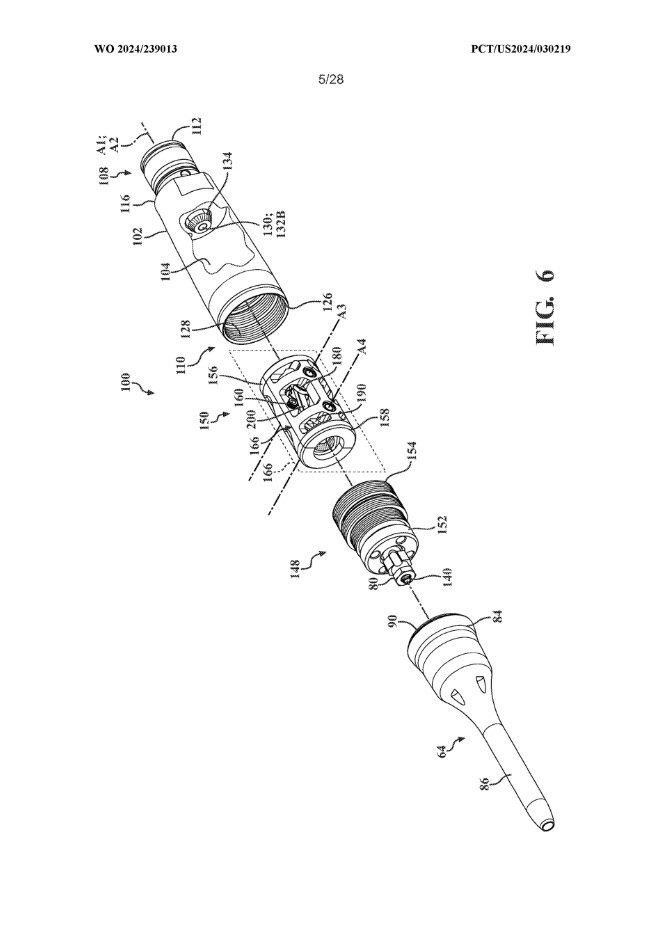
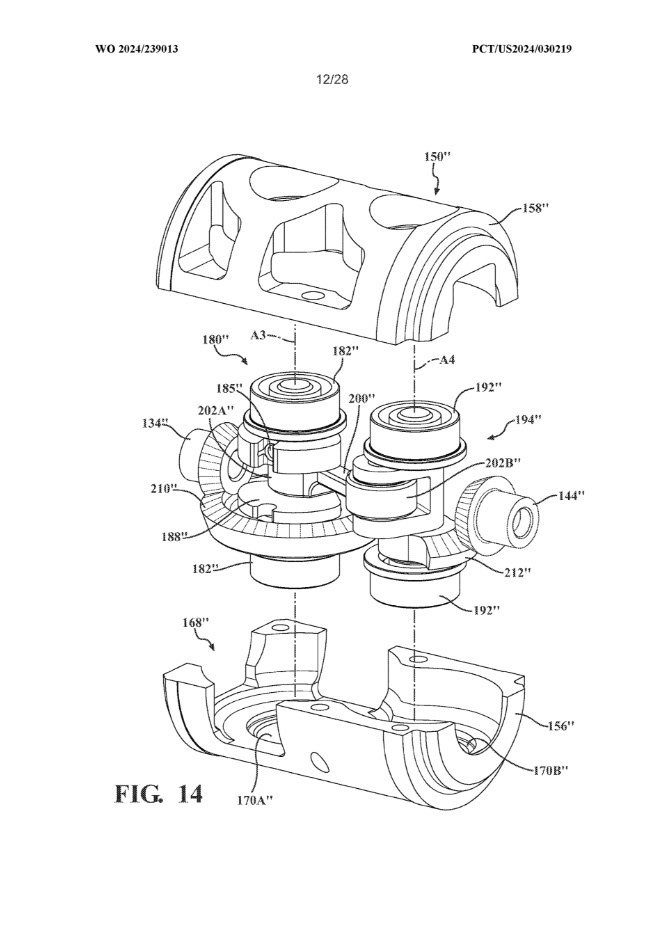
The Oscillating Attachment (OSCA) utilizes advanced linkages to convert rotational motion from the motor into oscillating motion at the cutting bur, minimizing soft tissue damage while maintaining cutting speed.
Result
Positive feedback across different labs in Europe, Asia and North America.
My Role/Contribution
• Worked as a senior design engineer, brainstormed the initial concept and delivered comprehensive mechanical designs using CAD (Creo), Technical Drawings, simulations, mechanism calculations, bevel gear design, shimming scheme, and tolerance stack-ups, while adhering to GD&T, DFA, and DFM principles. • Collaborated with a global team from the US and Ireland to define technical requirements, gather customer inputs, and enhance mechanical designs through validation testing. • Worked closely with US marketing to identify customer pain points, conducting VOCs with surgeons and translating feedback into actionable design improvements. • Designed and prototyped over 40 iterations based on inputs from VOCs, to successfully operate the device at acceptable cutting efficacy for a full duty cycle. • Developed an innovative method to reduce device heating by nearly 60% as per the feedback, also ensuring compliance with IEC 60601 temperature requirements. • Filed multiple invention disclosures focused on heat dissipation, hybrid attachments, and reliability improvements, all currently in the filing stage. • Managed timelines, orchestrated tasks to meet milestones. Maintained compliance with ISO13485 for product development lifecycle. • Filed a patent for a Motion-Converting Attachment for a Surgical Tool: PCT/US2024/030219.
Interesting facts about OSCA
• OSCA uses the world's smallest Crank-Rocker mechanism to achieve the oscillating motion at output • Used Creo Mechanism (simulation module) extensively to optimize the mechanism for high forces • Developed a mathematical model of the mechanism in an Excel sheet with over 400+ cross-references and formulas
Tech stack used
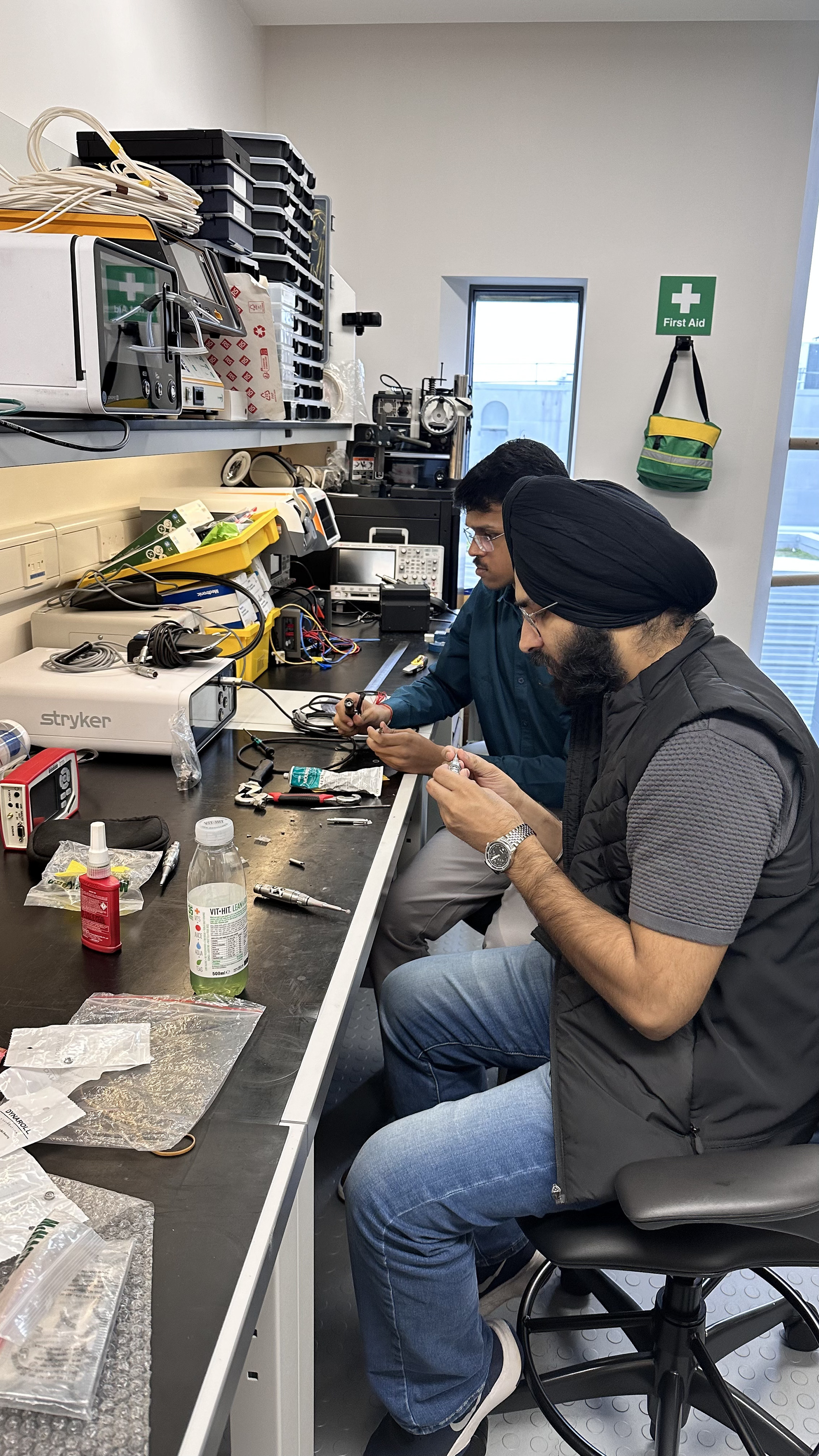
CAD, Drafting, GD&T — PTC Creo Simulation & Thermal Analysis — Creo Mechanism, Ansys Calculations, Tolerance Stack-up — Microsoft Excel Material Selection. DFA, DFM and Six-Sigma principles
Disclaimer: The information presented in this page is based on published information in form of patents and articles, and does not disclose any commercially sensitive details.