Meditate Air Purifier
Havells
2022
Preface
The Mediate Air Purifier is a high-performance air purification system designed to remove airborne pollutants using NASA's TiO2 technology to kill airborne viruses and bacteria while maintaining optimal airflow and low noise levels. Engineered for both residential and commercial spaces, it integrates advanced HEPA filtration, aerodynamically optimized impellers, and intelligent airflow management to deliver clean, breathable air with a CADR (Clean Air Delivery Rate) of 400 m³/h and 250 m³/h.
Problem Statement
Traditional air purifiers often struggle with: • Inefficient Airflow Management: Poorly designed impellers lead to air stagnation and uneven filtration, reducing efficiency by over 30%. • High Noise Levels: Many purifiers produce more than 65 dB of noise due to turbulent airflow and inefficient fan designs. • Reduced Filter Efficiency Over Time: Uneven Pressure drops across the HEPA filter can decrease performance, leading to reduced filtration efficiency. • Energy Consumption vs. Performance Trade-off: Balancing high filtration efficiency with power consumption below 80W remains a key challenge.
Solution
The Mediate Air Purifier tackles these issues with: • A custom-designed impeller optimized for high static pressure and smooth airflow reduces noise levels to 50 dB. The impeller was designed in a way that it was injection moulded as a single part. • Advanced airflow dynamics ensuring uniform pressure distribution across the HEPA filter, enhancing particle capture efficiency by 23% and extending filter life. • Fan curve analysis and pressure difference calculations to optimize motor performance, delivering 18% better energy efficiency compared to market alternatives. • Injection-molded components designed for lightweight yet durable construction, reducing manufacturing costs while maintaining high performance.

Fun Fact
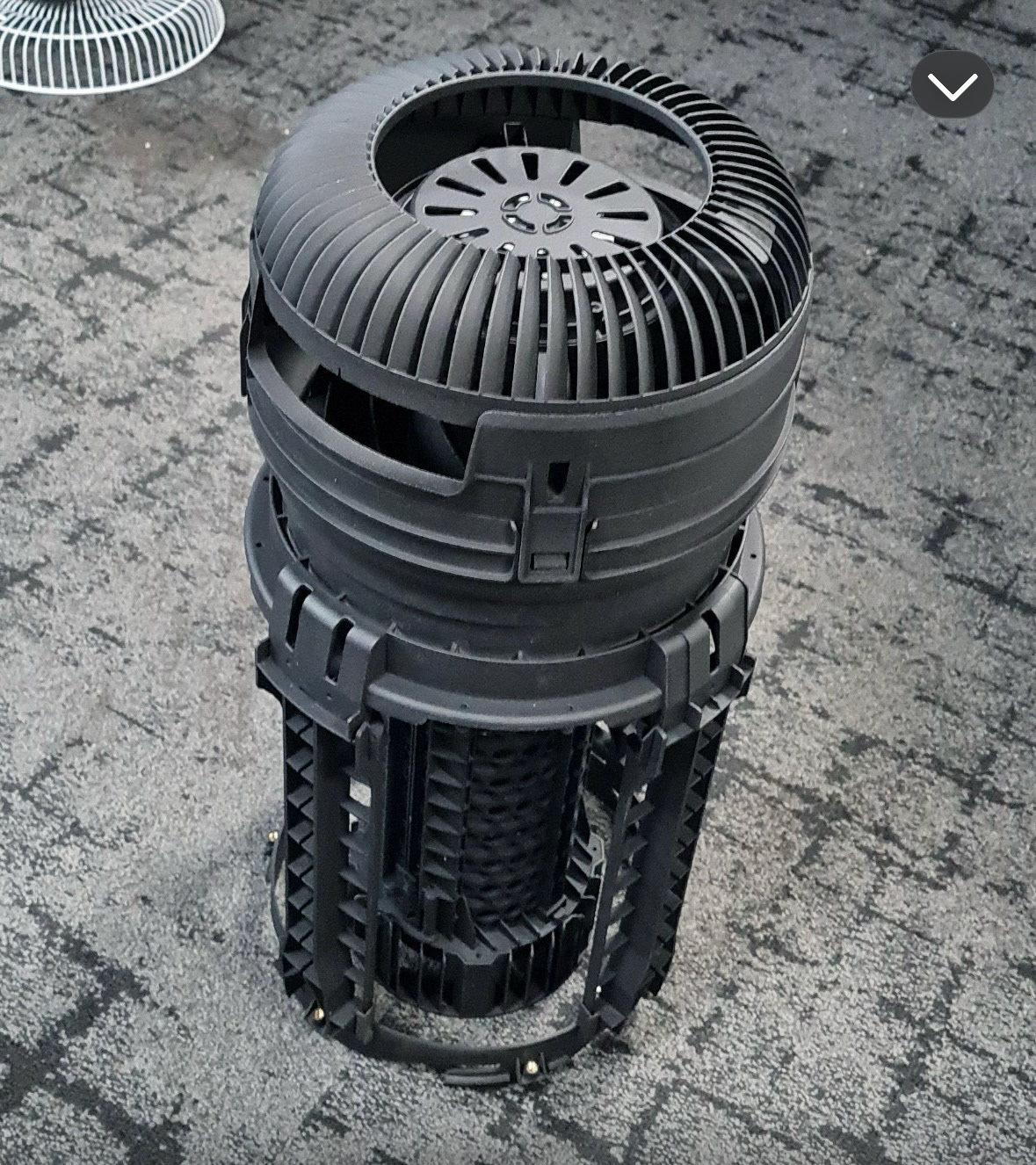
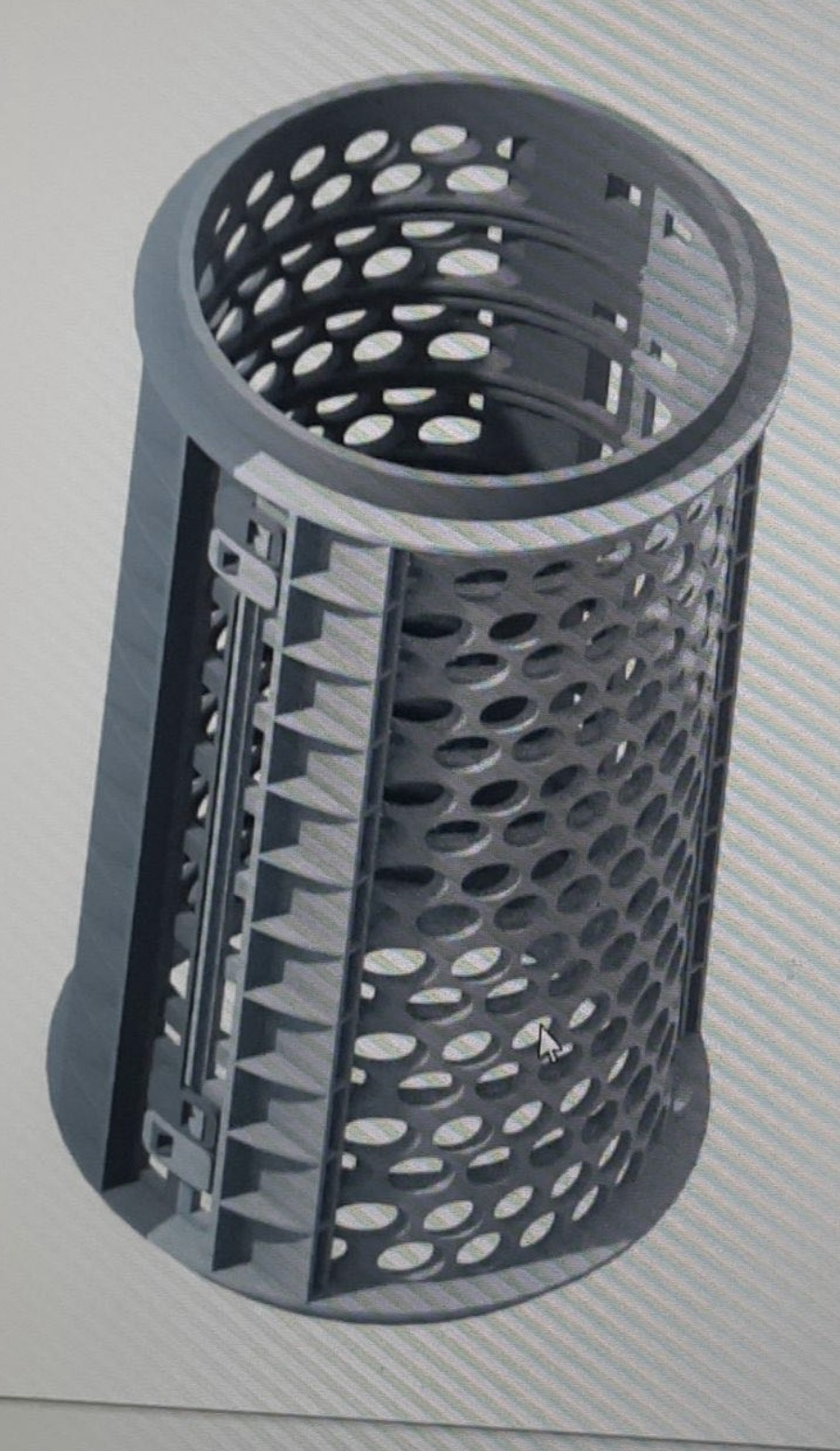
for AP 250, The TiO2 module was positioned inside the filter to optimize space. The casing assembly for the TiO2 module was designed with a single injection-molded part. This design allowed the two parts to fit together, forming a cylindrical casing that not only supported the module but also provided the necessary structural integrity to the device. This was a major win from a cost perspective, and my team appreciated me a lot for this!
Disclaimer: The information presented in this page is based on published information in form of patents and articles, and does not disclose any commercially sensitive details.